the opening days of the tour
The Dublin Arrival
[Shay Maloney](entity:character-recall-character-shay-maloney-7a2776b860d4) arrives in [Dublin](entity:location-recall-location-dublin-d76fcbad2c3f) with Smuggler’s Beat, astonished that a band from [Derby](entity:location-recall-location-derby-8b137b1d1f9a) has reached the scale of a major tour. His manager, [Corina Hussain](entity:character-recall-character-corina-hussain-36f0de0db377), reminds him that success came through hard work, while Shay deflects his nerves by insisting he needs new boots.
Before the first show, Shay walks the unfamiliar venue and lies on the stage, imagining the crowd and worrying that the band might fail. When [Larry](entity:character-recall-character-larry-e4ec2b6e8fcf) calls the Irish the band’s people, Shay privately remembers that Maloney is an adopted name and that he knows nothing of his biological ancestry.
the opening Dublin show
Ollie Sees Shay
[Ollie Pietruska](entity:character-recall-character-ollie-pietruska-e78afa716952) watches Smuggler’s Beat from the press booth, having travelled to Ireland to begin researching Shay’s biological family. Shay’s stage presence, instrument changes, and voice overwhelm [Ollie](entity:character-recall-character-ollie-0eaf1bca19bb)’s expectations; the musician he had only known as a name becomes intensely real to him.
When Shay catches Ollie’s eye, Ollie feels an unfamiliar warmth break through his habitual tension. He reminds himself that the assignment is professional and that Shay’s knowledge of his origins is not yet the point. The attraction, however, has already unsettled the boundary Ollie is trying to maintain.
the morning after the Dublin show
The Documentary Agreement
Shay wakes hungover on the tour bus, checks his blood sugar, and eats after [Corina](entity:character-recall-character-corina-b6c494900a7e) brings him breakfast. She reminds him that he agreed to take part in a [Sky](entity:organization-recall-organization-sky-4a33761df453) genealogy documentary, despite his hazy memory of the decision.
Shay recalls that his mother, [Michelle Maloney](entity:character-recall-character-michelle-maloney-78e268a505e7), had encouraged him to learn more about himself. Corina explains that the researcher will travel with the band and asks Shay to sign a confidentiality agreement, making clear that filming is beginning immediately.
later that day in Galway
The Researcher Arrives
[Ollie](entity:character-recall-character-ollie-0eaf1bca19bb) joins the tour and is directed to a bunk on the bus. While looking around, he notices one neatly kept bunk containing a notebook and wash bag, but Shay catches him before he can investigate further.
They introduce themselves and discuss how long the filming might take. Shay expects an immediate revelation and is disappointed to learn that Ollie is still researching. Their handshake and close conversation leave Ollie more attracted than he wants to admit, while Shay remains unsure what the documentary will involve.
the first afternoon of filming
The Birth Name Revealed
[Ollie](entity:character-recall-character-ollie-0eaf1bca19bb) tries to explain the documentary format, but Shay is distracted and has not understood that the research concerns his biological family rather than the Maloneys who raised him. When low blood sugar leaves Shay weak and shaky, Ollie fetches his medical bag and helps him get food and a drink.
After Shay asks how far back the research goes, Ollie opens his papers and clarifies that he is researching Shay himself. The revelation lands as a shock: Shay does not recognize the name on the file and realizes that the project is about a life he has never explored.
before the Galway show
A Talk Beside the River
[Ollie](entity:character-recall-character-ollie-0eaf1bca19bb) finds Shay alone by the [River Corrib](entity:location-recall-location-river-corrib-dcdeea916337) and apologizes for revealing the project’s purpose without warning. Shay explains that he had not been listening when [Corina](entity:character-recall-character-corina-b6c494900a7e) first discussed it, because Michelle was dying at the time.
Shay decides to continue, but asks to speak with his adoptive father before filming begins. Ollie agrees and briefly touches Shay’s shoulder; when Shay catches his arm, Ollie is surprised that the contact does not trigger the distress he usually experiences when someone touches his damaged side.
the night bus ride from Galway toward Belfast
Beginning in 1864
Unable to sleep, Shay finds [Ollie](entity:character-recall-character-ollie-0eaf1bca19bb) working at the front of the bus and joins him. After confirming that Shay has spoken with [Frank](entity:character-recall-character-frank-aae9eaa69e27), Ollie proposes beginning the family story in 1864 rather than with the modern-day answer to Shay’s identity.
Ollie explains that he wants the discoveries to unfold in stages and invites Shay to experience the research on camera. Shay agrees, despite his unease about filming, and their quiet closeness briefly eases the guardedness between them.
the Belfast library session
Rudolph Kaspersen’s Survival
In a library, [Ollie](entity:character-recall-character-ollie-0eaf1bca19bb) introduces Shay to [Rudolph Kaspersen](entity:character-recall-character-rudolph-kaspersen-900cef78f6cc), his great-great-great-grandfather, a young Danish officer caught in the 1864 Danish–Prussian War. He describes the siege and the devastating assault at [Dybbøl](entity:location-recall-location-dybb-l-349632a23a75), where Rudolph’s position was overwhelmed and many of his relatives were killed.
Rudolph survived the battle and returned home, ending his military career. Shay is shaken by the account, especially when he reads that Rudolph’s father, brothers, and uncle died there. He asks Ollie to send copies of the records so he can share them with [Frank](entity:character-recall-character-frank-aae9eaa69e27).
the next filmed library session in Glasgow
A Family of Musicians
At the [University of Glasgow Library](entity:location-recall-location-university-of-glasgo-f86ff545ee4b), [Ollie](entity:character-recall-character-ollie-0eaf1bca19bb) introduces [Anna](entity:character-recall-character-anna-ea2421a71401), an ancestor on Shay’s biological father’s side. She was Lithuanian, became a court musician while still young, and later left court to travel and play folk music beyond its formal traditions.
Ollie plays Shay a recording inspired by old Lithuanian music and explains that Anna’s daughter remained in the family line after Anna left. Shay hears echoes of his own choice to abandon classical music for folk performance. Learning that Ollie continued searching for Anna after their previous session deepens Shay’s feelings, even as he wonders whether the connection between them is only professional.
after the Glasgow library session
The Old Hardware Shop
[Ollie](entity:character-recall-character-ollie-0eaf1bca19bb) takes Shay to the former location of Rudolph’s hardware shop, now occupied by a cafe. He explains that Rudolph returned from the war, raised a family, and eventually died without, Ollie suspects, recovering from what he had experienced.
Shay is distant and asks why Ollie will not tell him what is troubling him. Ollie avoids answering, so they sit down to eat instead. Their conversation about Shay’s life and Ollie’s reticence makes clear that the research has become entangled with a personal connection neither man knows how to name.
the second Belfast show
Shay’s Belfast Improvisation
[Ollie](entity:character-recall-character-ollie-0eaf1bca19bb) does not attend the [Belfast](entity:location-recall-location-belfast-8a60016bc9a1) performances, and Shay feels his absence even as the crowd responds enthusiastically. For the encore, Shay cannot return to a familiar song and instead plays a melancholy harmonica melody that seems to carry grief he has not yet understood.
[Ben](entity:character-recall-character-ben-964df7d0a5ee) and the rest of the band join in, turning the uncertain solo into a full improvisation. The crowd embraces it, but Shay leaves the stage unsettled. The new music expresses the emptiness he has begun to feel as the family history reveals what he never knew he was missing.
after the Belfast show
Jealousy at the Bar
After the performance, [Ben](entity:character-recall-character-ben-964df7d0a5ee) tells Shay that he spent the previous night drinking with [Ollie](entity:character-recall-character-ollie-0eaf1bca19bb). Shay is unexpectedly jealous and loses interest in the meal he had wanted, then spots Ollie downstairs at a crowded bar.
Shay approaches him, but Ollie flinches when Shay grabs his arm and withdraws into the night. Worried that he has frightened Ollie, Shay follows him outside, where he finds Ollie smoking alone near a war memorial.
late that night in Belfast
The First Belfast Kiss
Shay sits beside [Ollie](entity:character-recall-character-ollie-0eaf1bca19bb) and asks whether he has hurt him. Ollie cannot explain his reaction and instead kisses Shay, first cautiously and then with urgent intensity. Shay kisses him back, and the two lose themselves against a wall in a moment neither had planned.
Ollie eventually pulls away because he is working on the documentary and fears compromising the job. Shay says he would keep the encounter private, but Ollie insists that secrecy is not the real issue. He walks Shay back to the bus, leaving them both uncertain about what the kiss means.
the journey from Belfast toward Glasgow
Ollie Leaves the Bus
Shay sleeps through much of the journey, while [Ollie](entity:character-recall-character-ollie-0eaf1bca19bb) repeatedly checks whether he is awake and worries that Shay may not remember their kiss. When Shay returns to the bus after the [Edinburgh](entity:location-recall-location-edinburgh-3139a0b6e81a) show, he barely acknowledges Ollie, who reads the distance as rejection and grows increasingly anxious.
As the bus prepares to leave for [Glasgow](entity:location-recall-location-glasgow-50d067f692a1), Ollie cannot face another stretch of travel. He grabs his camera bag and gets off before the bus pulls away. His departure is driven by a longstanding fear of being a passenger, though Shay does not yet understand what is behind it.
the day after Ollie leaves the bus
The Glasgow Appointment
Shay asks [Corina](entity:character-recall-character-corina-b6c494900a7e) and the driver where [Ollie](entity:character-recall-character-ollie-0eaf1bca19bb) has gone but gets few answers. [Ben](entity:character-recall-character-ben-964df7d0a5ee) eventually tells him that Ollie is in [Glasgow](entity:location-recall-location-glasgow-50d067f692a1) and plans to meet him the following morning at the [University of Glasgow Library](entity:location-recall-location-university-of-glasgo-f86ff545ee4b).
While waiting, Shay asks Corina what she knows about Ollie. She says he was once a celebrated young filmmaker, then disappeared from public view before resurfacing as a researcher. Her answer gives Shay more reason to wonder about Ollie, but also makes him feel guilty for investigating him through someone else.
the Glasgow library day
The Second Kiss
[Ollie](entity:character-recall-character-ollie-0eaf1bca19bb) presents Shay with information about [Anna](entity:character-recall-character-anna-ea2421a71401) and her musical life. The research gives Shay a new connection to his own artistic instincts, and Ollie plays him a recording of traditional music that might resemble what Anna once heard and performed.
Afterward, Shay confronts Ollie about his abrupt departure and asks what is wrong. In a park, Ollie admits that travel unsettles him and that he does not understand his own fear. Shay listens without forcing him to explain more. Ollie takes Shay’s hand, and they kiss again, this time sober and deliberate.
the final Glasgow show
Ollie Helps with Shay’s Hypo
After the last [Glasgow](entity:location-recall-location-glasgow-50d067f692a1) performance, Shay’s blood sugar drops and he struggles to concentrate. [Ollie](entity:character-recall-character-ollie-0eaf1bca19bb) stays with him, checks his glucose after learning the procedure from [Corina](entity:character-recall-character-corina-b6c494900a7e), and brings him Lucozade and food.
The band leaves Shay’s care to Ollie, a quiet sign that they trust him. Once Shay has recovered, the two return to the bus rather than go out drinking. They watch a film in Shay’s bunk, pressed close together, and Ollie falls asleep beside him.
dawn after the Glasgow film night
A Morning in Shay’s Bunk
[Ollie](entity:character-recall-character-ollie-0eaf1bca19bb) wakes in Shay’s bunk with an arm around him and, for a moment, feels unusually calm. [Corina](entity:character-recall-character-corina-b6c494900a7e) sees him leaving the bed but declines to make their private situation her concern.
Ollie later realizes that Shay deliberately stopped the film and allowed him to sleep beside him. He is tempted to imagine a shared life beyond the tour, but retreats into work and tells himself that returning to his solitary routine would be safer.
the drive from Glasgow toward Newcastle
The Road Crew Crisis
The band discovers that their road crew has quit after a dispute, and their equipment has been left behind in [Glasgow](entity:location-recall-location-glasgow-50d067f692a1). The lost gear threatens the next performance, while limited funds and a poorly arranged cash payment make hiring replacements difficult.
[Ollie](entity:character-recall-character-ollie-0eaf1bca19bb) offers to help with the physical work and volunteers to retrieve the equipment. When [Jumbo](entity:character-recall-character-jumbo-1930c0182bf3) insults Shay during the argument, Ollie grabs Jumbo and demands the van keys. The confrontation reveals how fiercely Ollie has begun to defend Shay, even as the band’s practical problems remain unresolved.
during the trip to retrieve the equipment
The Road to Newcastle
[Larry](entity:character-recall-character-larry-e4ec2b6e8fcf) warns [Ollie](entity:character-recall-character-ollie-0eaf1bca19bb) that Shay has been hurt before by a partner who left him uncertain and asks Ollie not to repeat that pattern. Ollie insists that he and Shay are only friends, but the warning lands because he knows his own repeated retreats have already confused Shay.
While driving toward [Newcastle](entity:location-recall-location-newcastle-e0a044b35c13), Ollie admits over the phone that the road journey is difficult for him. Shay apologizes for the dispute and asks when Ollie will return. Ollie offers directions to a Polish cafe so Shay can find a proper meal, then promises to find him after the show.
the night of the Newcastle show
The Delayed Equipment Run
[Ollie](entity:character-recall-character-ollie-0eaf1bca19bb) discovers that the van is locked behind a car park barrier that will not open until midnight. Shay messages to make sure Ollie is still coming back, and Ollie realizes that Shay is worried about losing him, not merely about the band’s equipment.
Unable to bear the delay, Ollie pays an attendant to release the van early and drives through the night. A radio broadcast of Smuggler’s Beat’s acoustic performance keeps him company, and hearing Shay’s voice intensifies his need to get back to him.
early morning after the Newcastle show
The Night Bus Reunion
[Ollie](entity:character-recall-character-ollie-0eaf1bca19bb) returns to the bus at about two in the morning and finds the band asleep. He goes to Shay’s bunk and tells him the van and equipment are safe; Shay answers that the gear was never what mattered to him.
They kiss and become intimate in the narrow bunk. Afterward, Ollie tells Shay that a car crash on the M1 motorway left him with severe burns on his left side. He has never shown the scars to anyone, not even his mother, and explains that his fear of travel and his guardedness are connected to what happened.
the morning after Ollie’s confession
Shay Stays Close
Shay wakes beside [Ollie](entity:character-recall-character-ollie-0eaf1bca19bb) and tries to understand the accident without treating Ollie as damaged. When Ollie remains in bed, Shay asks him to lie down again, and Ollie agrees. They share a quiet morning in which Ollie helps check Shay’s blood sugar.
Their closeness is interrupted by the day’s work, but Shay recognizes how much the nights together mean to him. He later speaks with [Frank](entity:character-recall-character-frank-aae9eaa69e27), who has noticed how often Ollie appears in Shay’s conversations. Shay begins to fear that the tour’s end will mean losing the connection they have only just begun to build.
the filmed session in Sunderland
Joyce King’s Shipyard Story
At a maritime heritage site, [Ollie](entity:character-recall-character-ollie-0eaf1bca19bb) introduces Shay to [Joyce King](entity:character-recall-character-joyce-king-8208b3db23b5), a great-great-grandmother descended from [Rudolph Kaspersen](entity:character-recall-character-rudolph-kaspersen-900cef78f6cc). He explains how [Sunderland](entity:location-recall-location-sunderland-a7a41722f2b7)’s shipbuilding industry changed during the [Second World War](entity:time-recall-time-second-world-war-80275f3e28b5) and how women, including Joyce, took on crucial work while men served elsewhere.
Shay is fascinated by the family story and the wartime photographs. During the filming, he teases Ollie and draws a smile from him, briefly easing the distance between them. Their shared walk afterward turns from ancestry toward the more difficult question of what they are to each other.
after the Sunderland filming
The Question Between Them
Shay asks [Ollie](entity:character-recall-character-ollie-0eaf1bca19bb) what is happening between them. Ollie reacts as though Shay is demanding every hidden fault and flaw at once, insisting that he is too damaged and that the tour will end soon. His fear makes him push Shay away before Shay has asked for a promise.
Shay touches Ollie’s wrists and carefully reaches the scarred skin beneath his clothes. He cries as he tries to reassure Ollie that life can continue even when someone has given up on living. Ollie says little, but Shay’s touch and presence interrupt his retreat.
the days after Sunderland
A Note Asking for Time
[Shay and Ollie](entity:relation-recall-relation-shay-and-ollie-15afa52f1906) share only guarded conversation after their confrontation. Shay struggles with [Ollie](entity:character-recall-character-ollie-0eaf1bca19bb)’s demand for time, knowing that the tour is nearing its end and that their future is uncertain.
During preparations for a large [Cardiff](entity:location-recall-location-3c79e72aefef) performance, Ollie offers to leave if his presence is making Shay unhappy. Shay refuses to let him turn uncertainty into another departure and kisses him on the stage. They lie together there, sharing closeness without resolving what comes next.
during the Cardiff stretch
Corina’s London Proposal
[Corina](entity:character-recall-character-corina-b6c494900a7e) notices that [Ollie](entity:character-recall-character-ollie-0eaf1bca19bb) has stopped sleeping in Shay’s bunk and asks what he hopes will happen after the tour. Ollie admits that he wants to stay connected to Shay, even though he has not figured out how to make that possible.
Corina suggests giving Shay a few days away from the crowded bus and proposes that Ollie take him to his flat in [London](entity:location-recall-location-london-420923d4a60a). The idea terrifies Ollie because his home has been a refuge for isolation, but imagining Shay there makes him realize how much he wants to share it.
the Southampton shows
The Hurdy-Gurdy Arrives
While watching a rehearsal, [Ollie](entity:character-recall-character-ollie-0eaf1bca19bb) sees Shay shape a haunting melody that recalls the Lithuanian music from the family research. Shay recognizes that the sound has been troubling him for days, as though the discoveries are feeding directly into his work.
Ollie later gives Shay an unfamiliar wooden instrument and tells him not to identify it yet, encouraging him to see whether it speaks to him. Shay is moved by the gesture and kisses Ollie openly. The instrument becomes another bridge between the music Shay makes and the ancestry he is beginning to claim.
after the Portsmouth show
The Portsmouth Breakdown
After a triumphant performance, Shay becomes unusually thirsty, irritable, and disoriented. He cannot account for his condition clearly, loses track of the others leaving the venue, and collapses into an uneasy sleep on the bus.
His blood sugar rises dangerously high, and he vomits repeatedly. [Jumbo](entity:character-recall-character-jumbo-1930c0182bf3) tries to help but does not know what to do, while [Corina](entity:character-recall-character-corina-b6c494900a7e) returns and attempts to test Shay. Shay refuses her touch and insists that he can manage the check himself, but he is too ill to follow through without help.
the night the tour reaches London
Ollie Takes Shay Home
[Ollie](entity:character-recall-character-ollie-0eaf1bca19bb) returns to the bus and finds Shay seriously unwell. He tests Shay’s glucose, helps him calculate and take insulin, and stays close while the treatment begins to work. Shay is ashamed and frightened, but he relaxes when Ollie holds him and monitors him.
Once Shay is stable enough to travel, Ollie tells [Corina](entity:character-recall-character-corina-b6c494900a7e) he is taking him home. He drives Shay to his flat in North [London](entity:location-recall-location-london-420923d4a60a) rather than leaving him to recover in the hotel, turning an emergency into the private time Corina had earlier suggested.
early morning at Ollie’s flat
The Scars in the Kitchen
After showering, Shay confronts [Ollie](entity:character-recall-character-ollie-0eaf1bca19bb) about refusing to explain why he no longer plays guitar. He argues that the imbalance between them hurts: Ollie knows Shay’s vulnerabilities, while Shay is still shut out of Ollie’s.
Ollie kisses him, then allows Shay to draw down his hoodie and remove his shirt. He stands bare-chested, exposing the extensive burns from the crash. Shay touches the scarred skin, and Ollie asks him to accept what he sees without trying to fix or pity him. For Ollie, revealing his body is a decisive step toward trust.
the morning after Ollie reveals his scars
A Night of Rest
Shay tells [Ollie](entity:character-recall-character-ollie-0eaf1bca19bb) that caring about him does not depend on his body being unscarred. Their intimacy deepens, but Shay’s exhaustion and unstable blood sugar make rest more urgent than sex. Ollie brings him food and stays beside him as he checks his levels.
They fall asleep together in Ollie’s bed. When Shay wakes, he sees Ollie’s scars without horror and recognizes them as part of the man he loves. The calm of the morning contrasts with Ollie’s expectation of rejection and makes his disclosure feel like the beginning of a different way of living.
later that day in London
Ollie’s Family and Home
Shay explores [Ollie](entity:character-recall-character-ollie-0eaf1bca19bb)’s flat and sees photographs of the life Ollie had before his accident. Ollie explains that he was not as happy as he looked in some pictures and describes a painful earlier relationship and his estrangement from parts of his family.
Ollie then takes Shay to visit his grandparents, [Feodor](entity:character-recall-character-feodor-5c2a7db2e0f3) and [Oliwia](entity:character-recall-character-oliwia-8229282247f9). Their welcome and food give Shay a sense of warmth, while Ollie’s grandparents gently push him to reconnect with his mother. The visit shows Shay a chosen and biological family world that Ollie has kept at a distance.
the day before the band returns to the road
Ollie Leaves the Tour
On the Underground, [Ollie](entity:character-recall-character-ollie-0eaf1bca19bb) tells Shay that he will not return to the tour the next day. Shay is hurt, but Ollie explains that he needs to confront what has happened to him rather than continue drifting through work and intimacy without addressing it.
Before leaving the bus, Ollie writes that he is coming back and hides the message beneath Shay’s pillow. The note cannot erase Shay’s uncertainty, but it gives him a promise to hold while Ollie returns to [London](entity:location-recall-location-london-420923d4a60a) and begins deciding what kind of help he needs.
the first day after leaving the tour
Ollie Asks for Help
Back in his flat, [Ollie](entity:character-recall-character-ollie-0eaf1bca19bb) reviews footage of Shay and recognizes that he is no longer the same person who joined the tour. He realizes he cannot build a life with Shay while continuing to hide behind work and self-imposed isolation.
Ollie messages his mother, [Jannah](entity:character-recall-character-jannah-4e633b2792a3), asking for help. At his parents’ home, he tells Jannah and [Wit](entity:character-recall-character-wit-86fb7b043c30) that he has fallen for someone and cannot keep managing alone. His parents offer a list of trauma counsellors they had researched for him, and Ollie agrees to consider treatment for himself rather than simply trying to become acceptable to Shay.
three days after Ollie leaves
Shay Sends the Letter
Shay rereads [Ollie](entity:character-recall-character-ollie-0eaf1bca19bb)’s note during the final [London](entity:location-recall-location-london-420923d4a60a) stretch of the tour. He misses Ollie and worries that the promise to return might not be enough, but he tries to respect Ollie’s need for space.
Unable to keep the feelings to himself, Shay writes that he misses and loves Ollie and that life no longer feels like home without him. He sends Ollie a photograph of the letter before he can lose his nerve. The message gives Ollie the assurance that Shay’s love does not depend on him being healed already.
the last London show
A Call Before the Show
Before an important performance, Shay feels unable to choose how to open the set. [Ollie](entity:character-recall-character-ollie-0eaf1bca19bb) calls and helps him think through why the show matters: the band has reached a scale they once believed impossible, and Shay needs to express the journey rather than simply select songs.
Ollie tells Shay that he has begun therapy and is learning to understand the fear and avoidance that followed his crash. He says he is not ready to attend the show, but promises to be in [Leeds](entity:location-recall-location-e5bdc32dcf6f) for the final filming. He also tells Shay that he loves him, answering the letter directly.
the train journey to Leeds
Ollie Faces the Fire
Travelling north to rejoin Shay, [Ollie](entity:character-recall-character-ollie-0eaf1bca19bb)’s train stops because a car has crashed and caught fire near the tracks. The scene recalls the accident that left Ollie burned, but he makes himself watch rather than hide from it.
When the fire is out, Ollie sees that the driver survived. The sight unsettles the old certainty that every crash must end in devastation. He writes Shay a note explaining the delay and his progress, then turns away from the wreck and uses the journey to steady himself.
late on the night of the final Leeds show
The Leeds Reunion
[Ollie](entity:character-recall-character-ollie-0eaf1bca19bb) reaches the tour bus after the performance and finds Shay waiting on Ollie’s bunk. Shay has read Ollie’s message and meets him with open arms. Ollie confirms that he has returned, and the reunion restores the closeness both have been missing.
The next morning, Ollie has to attend a police station before the final filming. He and Shay share breakfast and arrange to meet later, aware that the documentary’s last segment will also bring Shay to the most painful part of his own history.
the final filming session in Leeds
The Father’s Grave
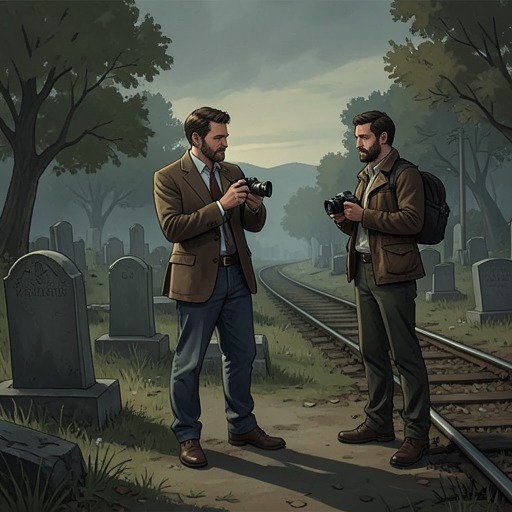
[Ollie](entity:character-recall-character-ollie-0eaf1bca19bb) takes Shay to a cemetery for the documentary’s final segment. Shay sees the name [Rudek Nowack](entity:character-recall-character-rudek-nowack-6fc1141775f5) on a grave and learns that Rudek was his biological father. Ollie explains that Rudek was convicted of murdering his former partner, Ava Martin, and later died by suicide in prison.
The discovery forces Shay to confront a lineage that is not only distant history but a direct source of grief and violence. Ollie offers to stop filming, but Shay chooses to continue, wanting to understand what happened to his birth family and to himself.
the final cemetery conversation
Francesca’s Death
[Ollie](entity:character-recall-character-ollie-0eaf1bca19bb) tells Shay that his biological mother was [Francesca King](entity:character-recall-character-francesca-king-b23bcc40bc11), who died in a house fire when Shay was only a few months old. The discovery helps explain how Shay became separated from the family whose names have surfaced throughout the research, but it also leaves a gap in his earliest memories.
Shay asks where he was after Francesca died. Ollie has found no record placing an infant at the fire, and the known chronology shows that Shay later spent time in foster care before adoption. The question of how he passed through those years becomes part of the revelation rather than a mystery the documentary can fully resolve.
the final cemetery conversation
The Grandparents’ Fight
At a memorial in the cemetery, Shay finds the names of his paternal grandparents, [Artur Nowack](entity:character-recall-character-artur-nowack-f540a420e6d1) and [Zofia Nowack](entity:character-recall-character-zofia-nowack-4575b51027dc). [Ollie](entity:character-recall-character-ollie-0eaf1bca19bb) explains that they cared for Shay after Francesca’s death and fought to keep him, but social services eventually placed him in foster care.
Shay learns that his grandparents wanted him and had not simply abandoned him. Artur and Zofia lived in [London](entity:location-recall-location-london-420923d4a60a) for years, ran a cafe, and later returned to [Warsaw](entity:location-recall-location-warsaw-0c6571460e56), where they were buried. Their story gives Shay a history of love and loss that his adoption records had never supplied.
the end of the Leeds filming
The Polish Heritage Revealed
[Ollie](entity:character-recall-character-ollie-0eaf1bca19bb) confirms that Shay is Polish and explains that Artur and Zofia’s grave lies close to Ollie’s family home. The name Nowack connects Shay to a family whose existence he had never known, while the earlier Danish and Lithuanian branches remain part of his wider ancestry.
Ollie also reveals that the strange instrument he gave Shay is a hurdy-gurdy and shows him a photograph of Artur playing one. Shay understands that his connection to music may have roots in the family he lost, but he does not treat blood as a complete definition of himself. His discovery becomes a beginning rather than a demand to abandon the Maloneys who raised him.
six months later
A Life Built Together
Six months after the tour, Shay is living with [Ollie](entity:character-recall-character-ollie-0eaf1bca19bb) and preparing for another run of performances. He considers using the Polish name Rudzio as a stage name, but decides against claiming Nowack as his own. He remains a Maloney and understands that his identity can hold more than one family history.
Ollie finishes editing the documentary and no longer hides his scars from Shay. The two share a life split between Shay’s cottage and Ollie’s [London](entity:location-recall-location-london-420923d4a60a) home, with music, family visits, and affection replacing much of the isolation that once defined them. Shay says he loves Ollie, and Ollie answers with the same certainty, while Shay still insists he needs new boots.